 English
 中文简体
中文简体 русский
 GET A QUOTE
Industry News
In the world of industrial maintenance, automotive repair, and machinery assembly, the removal of tightly fitted components is a frequent and often challenging task. Bearings, gears, pulleys, and wheels are typically installed with interference fits, creating a secure bond that makes disassembly difficult. This is where the hydraulic puller becomes an indispensable tool, providing a controlled and powerful solution for the safe and efficient removal of these components. The use of a hydraulic puller has become standard practice in workshops and factories, significantly reducing the time and effort required for complex repair procedures while small the risk of damage to expensive parts.
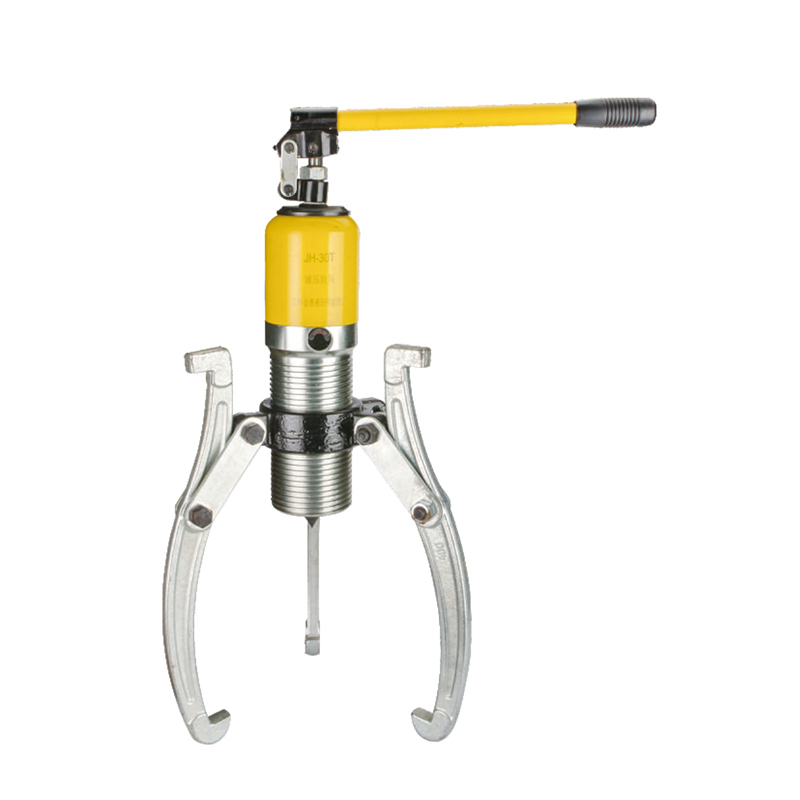
The fundamental operation of a hydraulic puller is based on the principles of hydraulic force multiplication. Unlike traditional mechanical pullers that rely on manual torque, a hydraulic puller utilizes a compact hydraulic cylinder as its core component. This cylinder is actuated by a hand pump or a powered pump unit, generating substantial force that is transmitted through a central pushing screw or a ram. This force is applied directly to the shaft of the component being removed, while two or more arms grasp the back of the part, such as the inner or outer race of a bearing. The synchronized application of force pulls the component straight off its shaft, preventing the cocking and binding that can occur with less advanced methods.
The advantages of using a hydraulic puller are numerous and contribute directly to operational efficiency and safety. The lots of significant benefit is the immense force that can be generated with relatively little input from the operator. This allows for the removal of components that are severely seized or that have been in place for an extended period. Furthermore, the controlled and linear nature of the hydraulic force reduces the risk of sudden, unpredictable failures that could cause personal injury or part destruction. The design of a hydraulic puller also helps to protect the integrity of the components involved; by applying force evenly and directly, it avoids the damaging hammering or prying that can mar shafts and housing surfaces.
The applications for a hydraulic puller are widespread across multiple industries. In the automotive and heavy trucking sectors, a hydraulic puller is routinely used to remove wheel bearings, steering wheels, pulleys, and harmonic balancers. Within industrial settings, maintenance teams rely on a hydraulic puller for tasks such as replacing pump impellers, removing couplings from motor shafts, and disassembling large gears and rollers in production machinery. The versatility of the tool is enhanced by a range of available accessories, including various-sized arms, extension yokes, and custom-designed attachments that allow a single hydraulic puller to be adapted for a wide array of specific tasks.
Ongoing development in the field of hydraulic puller technology focuses on enhancing user convenience and expanding capability. Modern hydraulic puller designs often incorporate features like lightweight yet high-strength materials for improved portability, integrated safety valves to prevent over-pressurization, and more efficient pump designs for faster operation. As machinery continues to evolve, the hydraulic puller will remain a fundamental tool in the maintenance toolkit, ensuring that even the lots of stubborn components can be removed safely and efficiently, thereby supporting the reliability and longevity of critical equipment across countless sectors.
 Previous