
 English
 中文简体
中文简体 русский
 GET A QUOTE
Industry News
Home / News / Industry News / Electric Steel Bar Bending Machine Configurations for Rebar Processing
Rebar fabrication buyers rarely need only one specification. A contractor may process smaller reinforcing bars for routine construction work, while a steel fabrication workshop may require a higher-capacity machine for larger bar diameters and repeated bending. For this reason, selecting an Electric Steel Bar Bending Machine is often a matter of matching machine configuration with the actual rebar range, power supply, working frequency, and operating environment.
For overseas distributors, this model-based approach also affects product assortment. Offering several capacities can serve different customer groups without forcing every buyer toward an oversized machine.
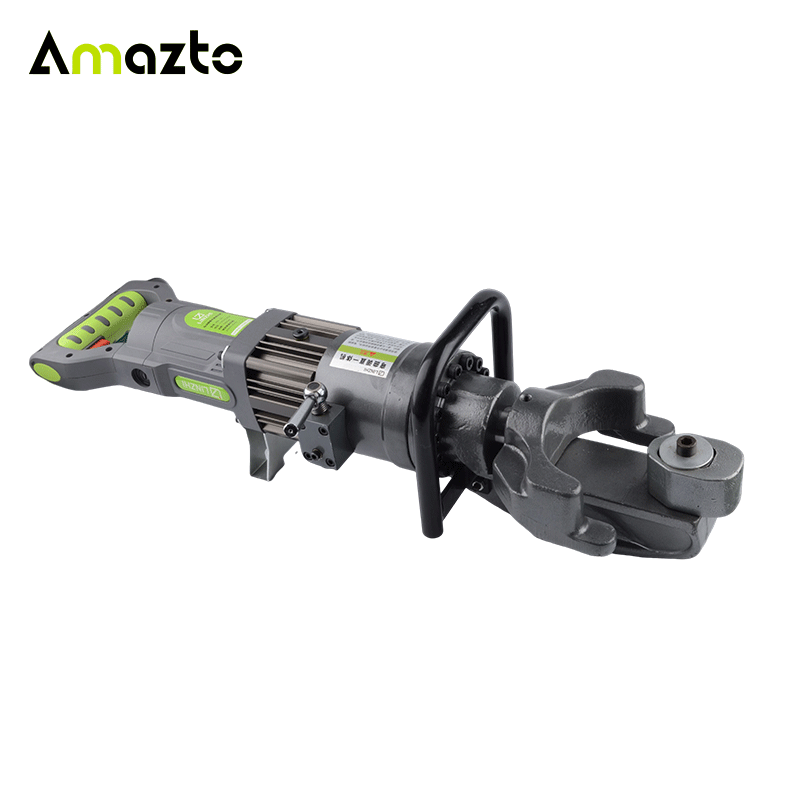
An Electric Steel Bar Bending Machine connects directly to an electrical power source, making power availability an important specification during procurement. Unlike battery-powered rebar equipment, corded models can operate continuously without stopping for battery replacement or charging.
Linzhi's electric rebar bending range includes models such as RB-16, RB-20, RB-22, RB-25, and RB-28. Their specifications vary by bending range, motor power, weight, and operating speed. For example, the RB-16 model supports Φ4–16 mm rebar with 1200W no-load power, while the RB-28 model is designed for Φ8–28 mm rebar with 1500W no-load power.
This range gives buyers a practical way to organize purchasing around actual bar sizes rather than treating every project as requiring the same machine.
The bending range directly influences which model fits a buyer's downstream market. A distributor supplying general construction contractors may require compact equipment for smaller diameters, while steel fabricators handling heavier reinforcement may need a larger bending range.
|
Model |
Bending Range |
No-Load Power |
Approx. Bending Speed |
Procurement Position |
|
RB-16 |
Φ4–16 mm |
1200W |
2.0–3.0 sec |
Smaller-diameter rebar work |
|
RB-20 |
Φ8–20 mm |
1400W |
3.0–4.0 sec |
General fabrication requirements |
|
RB-22 |
Φ8–20 mm |
1300W |
4.0–5.0 sec |
Continuous powered operation |
|
RB-25 |
Φ8–25 mm |
1500W |
6.0–8.0 sec |
Higher-capacity applications |
|
RB-28 |
Φ8–28 mm |
1500W |
7.0–9.0 sec |
Larger-diameter rebar processing |
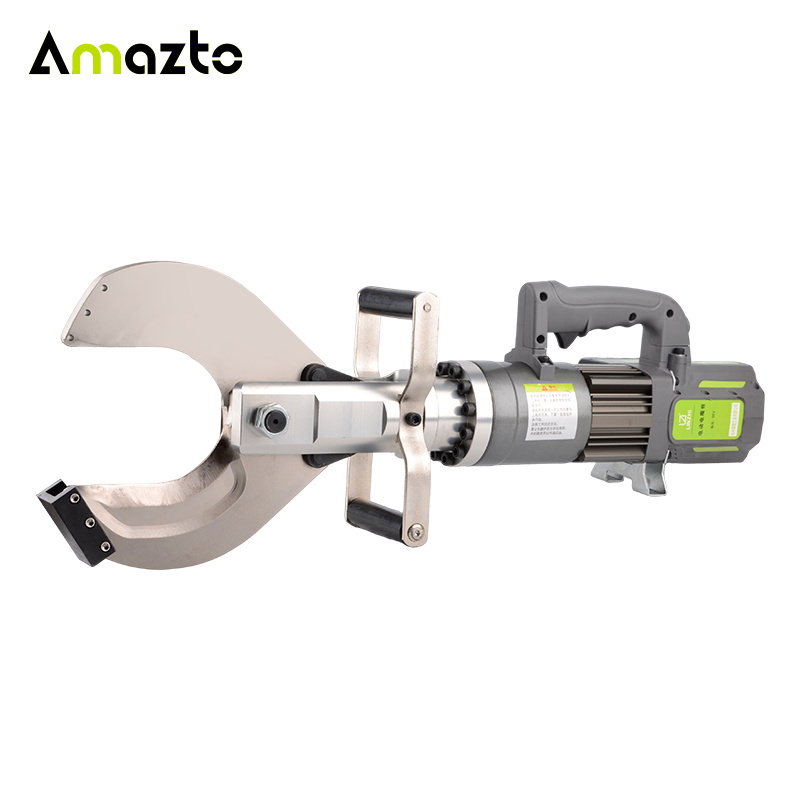
The specifications show why product selection should not rely on motor wattage alone. The usable rebar range, machine weight, bending speed, and intended work environment need to be considered together. Linzhi lists both standard electric models and lithium-battery configurations within its rebar bending product range, giving buyers additional options when building a product portfolio.
For an Electric Steel Bar Bending Machine, the bending head carries repeated mechanical loads as the bar moves against the bending components. Its structural strength and assembly accuracy therefore affect the consistency of machine operation.
Linzhi's electric models use reinforced and sealed bending-head structures. The RB-20, RB-22, and RB-28 models also feature durable motor assemblies and ergonomic handles for controlled operation.
From a manufacturing perspective, inspection should cover the motor, bending head, moving components, electrical connections, and overall mechanical assembly. A machine can have an adequate motor rating on paper while still requiring careful inspection of the mechanical transmission and bending components before shipment.
The manufacturer also maintains testing equipment and a laboratory for product quality control, while its R&D team can develop products according to customer drawings or samples. These capabilities are relevant to distributors discussing model adjustments or OEM requirements for particular markets.
An Electric Steel Bar Bending Machine product line with several capacities can support different procurement strategies. Instead of ordering one model for every customer, wholesalers can establish a basic range based on common rebar diameters.
For example, a distributor could position the RB-16 toward smaller-diameter work and use RB-25 or RB-28 when customers require higher capacity. The RB-20 and RB-22 can occupy the intermediate range, giving buyers additional choices when power, weight, and bending speed need to be balanced.
Packaging also matters when equipment is shipped internationally. Linzhi lists plastic-box packing for several models, which gives overseas buyers a defined packaging format to review alongside product dimensions, gross weight, voltage, and spare-parts requirements.
For an Electric Steel Bar Bending Machine, pre-shipment inspection should verify electrical operation, bending movement, component installation, and the machine's stated working range. Voltage configuration also deserves attention because Linzhi lists 220V/50Hz on several models and indicates that 110V versions can be customized for certain products.
For B2B orders, buyers can therefore evaluate the product through a combination of technical specifications and manufacturing support. Model capacity, power configuration, bending range, packaging, voltage, inspection, and customization can be discussed before production, helping distributors build an equipment range that corresponds with the rebar specifications handled in their target markets.
The Electric Steel Bar Bending Machine is consequently better treated as a configurable equipment category than as a single standard machine. Linzhi's range of electric and battery-powered rebar bending products provides different capacity levels for buyers planning wholesale, project supply, or regional distribution.
If you have any questions, please fill out the contact form at the bottom of the page and contact us.
Provide high-quality products for domestic and international customers
China Hydraulic Tool Manufacturer

