 English
 中文简体
中文简体 русский
 GET A QUOTE
Industry News
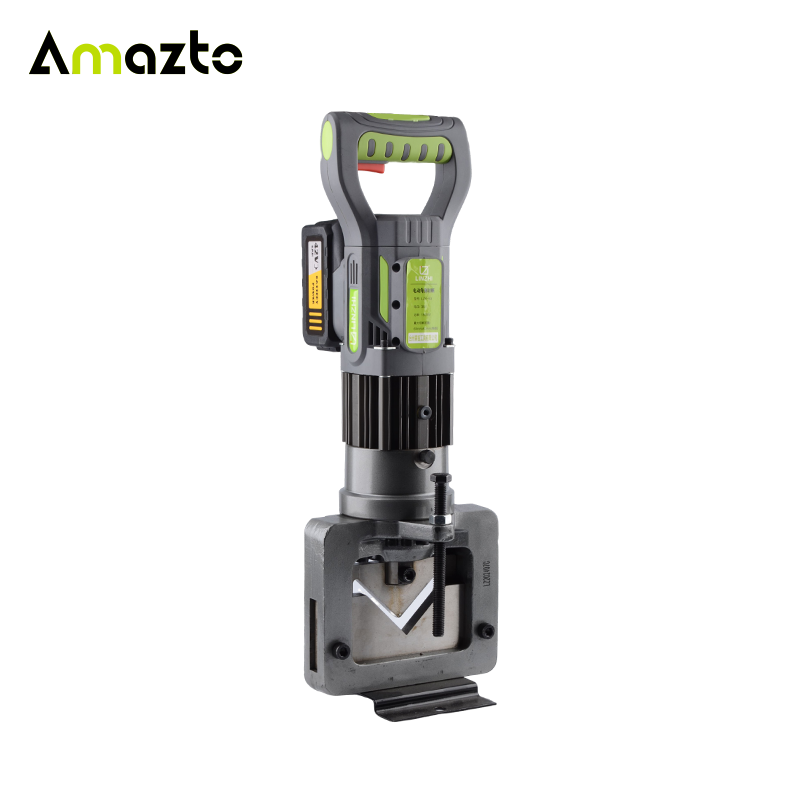
A Double Lithium Battery Punching Machine changes the workflow when metal fabrication moves away from a fixed workshop. Instead of connecting a tool to a permanent outlet or hydraulic hose, an operator can carry the punching unit directly to the workpiece. Linzhi's MPL-20 uses two lithium batteries and an 18T hydraulic output, with a 40 mm throat depth and a listed working range for angle iron, steel plate, and copper or aluminum bar. The model is supplied with a plastic box and standard punch sizes from 6.5 to 20.5 mm, with customized molds available.
Cordless Operation Changes Job-Site Workflow
A Double Lithium Battery Punching Machine is useful when structural parts cannot be moved easily to a workshop machine. Installers working on frames, supports, electrical components, or steel assemblies can position the punch where the hole is needed.
The main change is logistical. A fixed punching setup requires the workpiece to reach the equipment. A battery hydraulic unit reverses that arrangement. This battery powered punching tool can be taken to the steel section, reducing the need to reposition long or already-installed components.
For B2B buyers, portability can influence how crews organize punching and installation work across a site.
Two Batteries Support Work Planning
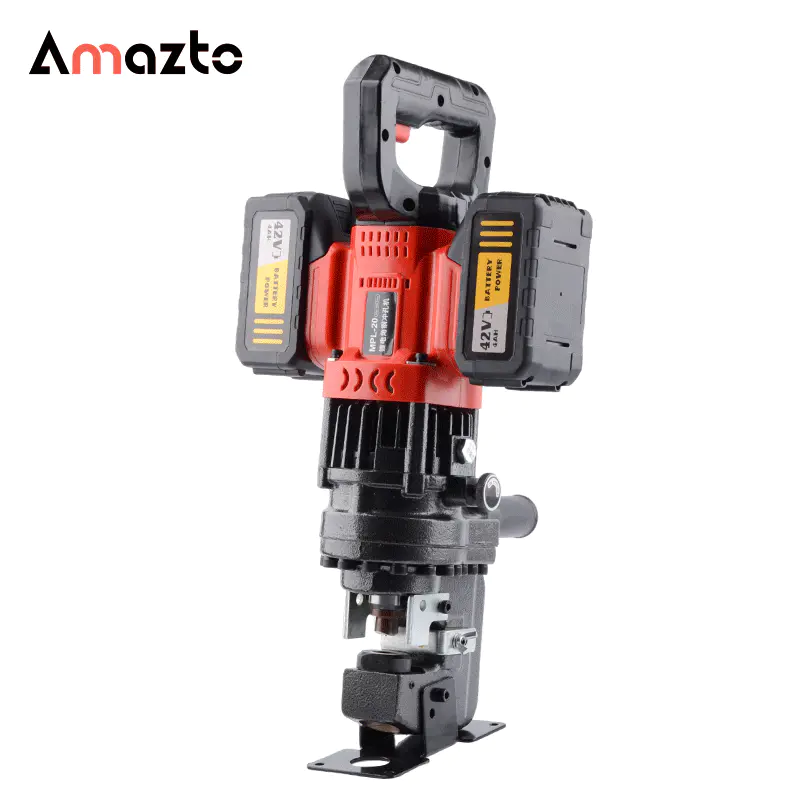
The MPL-20 uses a dual-battery arrangement and is rated at 220V/40V with an 1800W power specification. Its listed weight is 11.6 kg or 15.6 kg, depending on the stated configuration.
For a Double Lithium Battery Punching Machine, the second battery is part of the operating architecture, not just an accessory. Teams can plan charging and battery changes around the working schedule rather than around access to a fixed power connection.
The usefulness of a battery powered punching tool depends on the application. Sites with frequent short punching tasks may gain more from mobility than projects where all material can be processed beside a workshop machine.
Hydraulic Force Works With Positioning
The electrical system drives a hydraulic mechanism that delivers punching force through the die. On the MPL-20, the manufacturer lists an 18T output and a 40 mm throat depth, measured from the center of the mold to the inside.
This makes positioning part of the process. The operator still has to place the profile correctly, align the punch with the intended hole, and keep the material within the machine's working range.
A Double Lithium Battery Punching Machine can reduce setup associated with external power, but it does not remove the need for accurate marking and positioning.
Material Thickness Defines the Working Range
Punching requirements vary with material type and thickness. The MPL-20 is listed for copper or aluminum material below 8 mm, iron or steel plate below 6 mm, and angle iron sizes from 3 to 6.3#.
For manufacturers and distributors, these figures are more useful than a general performance claim. A Double Lithium Battery Punching Machine should be matched with the actual section, thickness, and hole diameter required by the project.
The standard molds include 6.5, 9, 13, 17, and 20.5 mm sizes, while customized molds are available.
Mobility Can Change Maintenance Routines
A portable hydraulic punch also changes where inspection takes place. Operators working on construction or installation sites need to consider battery condition, hydraulic performance, die wear, sealing components, and the cleanliness of the punching area.
The MPL-20 uses a sealed hydraulic unit and a portable structure for field work. For a Double Lithium Battery Punching Machine, routine checks should focus on the parts that directly affect punching accuracy and force transfer.
A battery powered punching tool also benefits from organized battery storage and charging practices, especially when several crews share equipment.
Tool Weight Still Matters
Portability does not make weight irrelevant. At 11.6 kg or 15.6 kg depending on configuration, the MPL-20 still needs to be carried and positioned by an operator.
For this tool, the useful question is whether its weight, throat depth, punching range, battery arrangement, and carrying method suit the work environment.
Battery Punching Fits Mobile Fabrication
The development of the Double Lithium Battery Punching Machine reflects a move toward portable metal-processing equipment. Its value comes from combining hydraulic force with battery power and a structure suited to on-site positioning.
For B2B buyers, the selection process should center on material thickness, hole sizes, throat depth, battery configuration, tool weight, and expected work location. A Double Lithium Battery Punching Machine fits where mobility changes the practical workflow.
As installation and fabrication work becomes more mobile, the Double Lithium Battery Punching Machine gives crews another way to bring punching capability to the material instead of moving every workpiece to a fixed machine.