 English
 中文简体
中文简体 русский
 GET A QUOTE
Industry News
Across industries where heavy machinery and precision equipment are maintained, a specialized tool has become indispensable for safe and efficient disassembly: the hydraulic puller. This device, which utilizes controlled fluid power to generate substantial, focused force, is the preferred solution for removing tightly-fitted components like bearings, gears, pulleys, and wheels from shafts without causing damage. Its application represents a significant advancement over traditional mechanical methods, offering enhanced control, power, and safety for maintenance professionals.
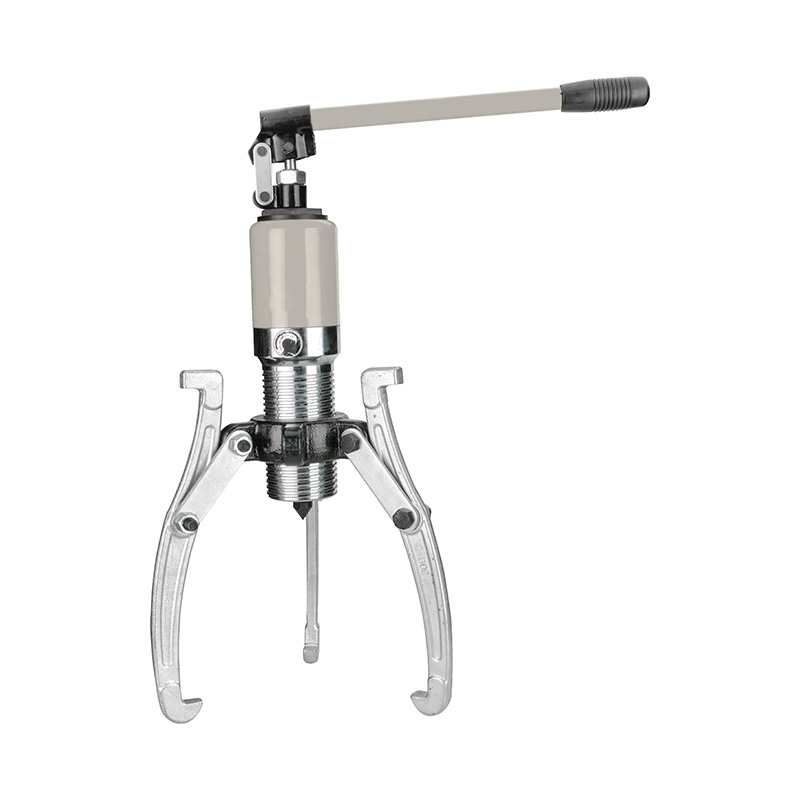
The fundamental operation of a hydraulic puller centers on the principle of hydraulic force multiplication. A typical unit consists of a hydraulic ram or cylinder, a set of strong arms or jaws, and a central forcing screw. When hydraulic pressure is applied—often via an integrated hand pump or a separate power unit—the ram extends. This action pushes against the shaft end or a crossbar, while the arms grip the component to be removed. The generated force is distributed evenly, pulling the component directly along the shaft axis. This controlled, linear force is crucial for extracting parts that have been secured by interference fits, keyways, or corrosion, tasks where conventional hammering or leveraging could harm the component or the shaft.
The versatility of the modern hydraulic puller is a key factor in its widespread adoption. Available in two-armed and three-armed configurations with varying capacities, these tools are tailored to specific tasks. A two-arm hydraulic puller might be used for removing gears, while a three-arm version provides balanced force for wheel hubs or bearings. Furthermore, specialized designs exist, including internal pullers that grip from inside a bore and push-pullers that can both install and remove components. This adaptability makes the hydraulic puller a common sight in automotive repair shops, industrial plants, marine engineering, and wind turbine maintenance.
The primary advantage of using a hydraulic puller is its ability to deliver high, measurable force in a controlled manner. This control lesss the risk of accidents associated with flying parts or sudden releases of energy common in brute-force methods. For technicians, it reduces physical strain and increases job safety. From a repair perspective, the precise application of force greatly lowers the probability of damaging expensive components or the shaft itself, preserving assets and reducing replacement costs. The efficiency gained by using a hydraulic puller can significantly shorten equipment downtime, a critical consideration in production and transportation sectors.
Technological integration is further refining the capabilities of the hydraulic puller. Some advanced models feature digital pressure gauges, allowing operators to monitor and precisely regulate the applied force, ensuring it remains within safe limits for the specific materials involved. Improvements in seal technology and fluid formulations have enhanced reliability and extended the service life of the tools, even in demanding environments. The development of lighter, yet stronger, materials for arms and components has also improved portability and ease of use on job sites.
In essence, the hydraulic puller is more than just a tool; it is a force-multiplying solution that combines power with precision. By enabling safe, controlled, and non-destructive disassembly, it protects valuable equipment, enhances technician safety, and supports operational efficiency. As maintenance philosophies continue to emphasize care and accuracy, the hydraulic puller will remain a cornerstone technology in the toolkit of industries worldwide.
 Previous