 English
 中文简体
中文简体 русский
 GET A QUOTE
Industry News
A crimping die that looks correct under a caliper can still produce an inconsistent joint if its internal profile doesn't match the fitting's sealing ring geometry. Inside a Pipe Fitting Crimping Tool, the die profile — not the clamping force alone — determines whether compression lands evenly around the fitting's circumference or concentrates unevenly at a few contact points.
U-Profile, V-Profile, And TH-Profile Dies
Die manufacturers machine three common profile shapes for hydraulic crimping tools: U-profile, V-profile, and TH-profile, each matched to a different fitting standard used across plumbing and HVAC systems. A U-profile die distributes force across a rounded contact surface, reducing localized stress on the fitting wall, while a V-profile concentrates force into a narrower band, useful for fittings requiring a sharper deformation line. TH-profile dies, shaped to match a specific fitting manufacturer's sealing ring geometry, produce the consistent results but only when paired with fittings from that same standard, which is why a Pipe Fitting Crimping Tool sold into mixed markets typically ships with interchangeable die heads rather than a single fixed profile.
Radial Force Distribution During The Crimp Cycle
As the jaws close around a fitting, force builds unevenly across the crimp cycle rather than applying at constant pressure from start to finish. Engineers designing the jaw linkage inside a Pipe Fitting Crimping Tool calibrate the mechanical advantage curve so peak force arrives just as the die profile reaches full contact with the sealing ring, rather than earlier in the stroke when partial contact could deform the ring unevenly. Testing this timing typically involves cutting a completed crimp in cross-section to check ring compression uniformity around the full circumference, since a die reaching peak force too early tends to leave one side of the ring under-compressed.
Jaw Wear And Replacement Timing
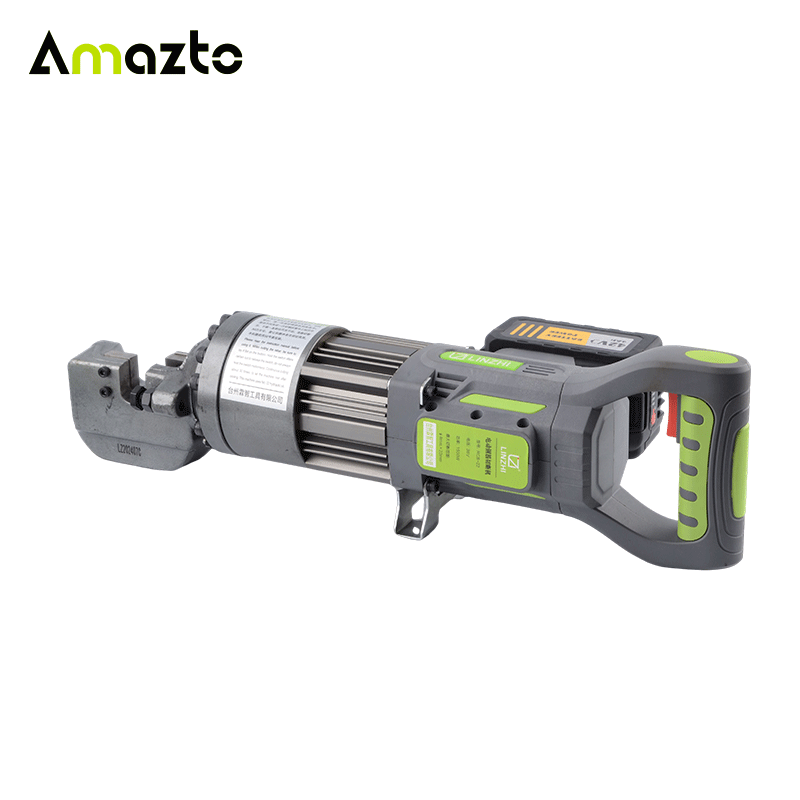
Repeated cycling gradually rounds the sharp edges of a die's profile, and that wear changes the crimp shape before an operator notices any visible damage. Shops running hydraulic crimping tools through high daily cycle counts typically track die wear by measuring completed crimp dimensions against a reference gauge rather than by visual inspection alone, since profile degradation affects sealing performance well before the die shows obvious pitting or deformation. Die sets used on stainless steel fittings tend to wear faster than those used on softer copper fittings, a difference that shapes how factories schedule replacement intervals across different job types.
Cylinder Stroke Consistency
The hydraulic cylinder driving jaw closure inside a Pipe Fitting Crimping Tool needs consistent stroke length across thousands of cycles to keep crimp dimensions repeatable. Buyers evaluating cylinder performance across different models typically check several factors:
- Piston seal material and expected cycle life before seal replacement
- Return spring tension, which affects how quickly jaws reopen between crimps
- Pressure relief calibration, preventing overtravel that could damage the die profile
- Stroke length tolerance across repeated cycles under continuous production use
A cylinder with inconsistent stroke length produces crimps that pass inspection on some units and fail on others from the same production run, a problem that surfaces gradually as seals wear rather than appearing immediately after installation.
Matching Die Sets Across Fitting Materials
Copper, stainless steel, and carbon steel fittings each respond differently under identical crimping force, which is why die manufacturers rarely recommend a single die profile across all three materials. Hydraulic crimping tools built for mixed-material job sites typically come with a die exchange system allowing technicians to switch profiles without recalibrating the cylinder's force output, since the die geometry rather than the applied pressure carries much of the responsibility for matching each material's deformation characteristics. Technicians working across residential copper lines and industrial stainless installations in the same week rely on this exchange system to avoid keeping multiple separate tools on hand, provided the Pipe Fitting Crimping Tool frame accepts the full range of die profiles a given job site requires.
 Previous