 English
 中文简体
中文简体 русский
 GET A QUOTE
Industry News
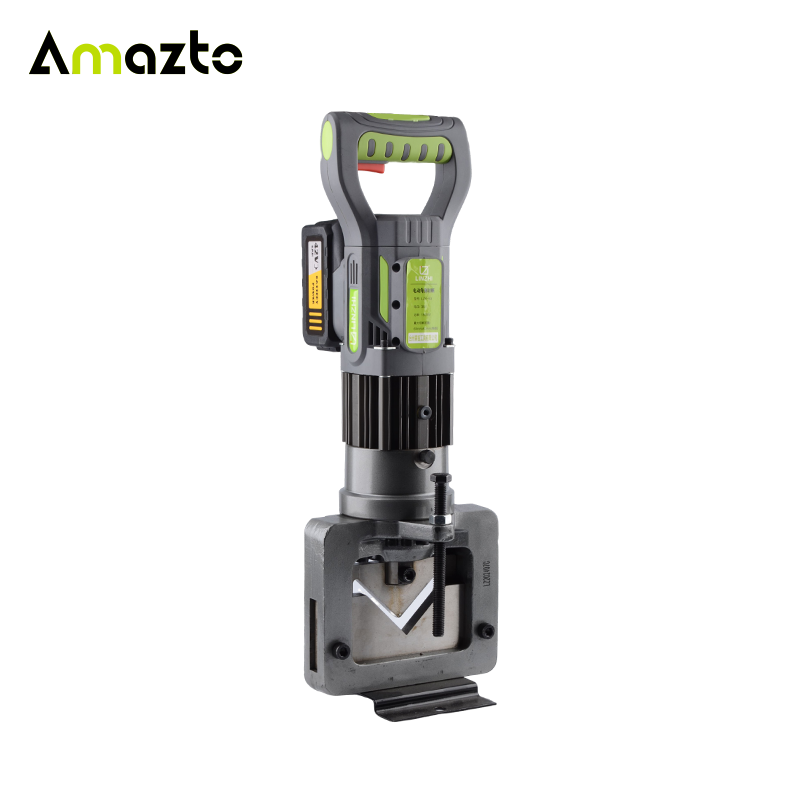
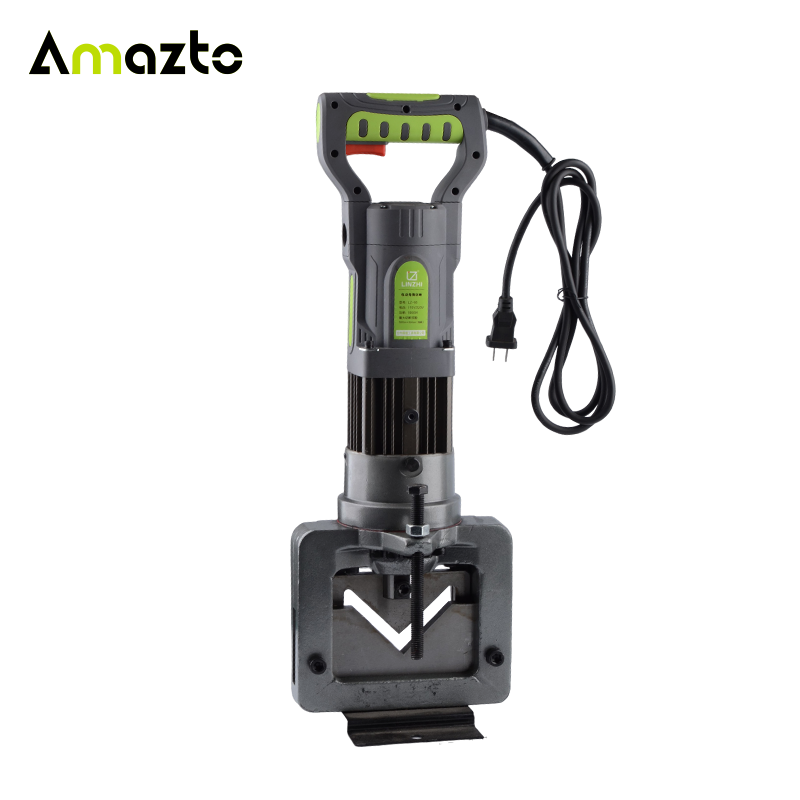
A Channel Steel Electric Punching Machine is designed for material that differs from flat plate. Channel steel has a formed profile with a web and flanges, so the punching tool needs enough throat depth and working clearance to position the section correctly. Linzhi's LZ22-8 uses a 20T output, 1800W motor, 40 mm throat depth, and an adjustable positioning structure. Its standard molds range from 6.5 to 20.5 mm.
Profile Shape Changes Punching Requirements
Flat sheet can be supported across a broad surface, but channel steel introduces corners, flanges, and a recessed web. These features influence where the punch head can reach.
A Channel Steel Electric Punching Machine therefore needs a throat structure suited to the profile being processed. The LZ22-8 lists a 40 mm throat depth, measured from the center of the mold to the inside of the head.
For channel steel fabrication, this dimension helps define where holes can be positioned relative to the edge and internal geometry of the profile.
Throat Depth Affects Hole Placement
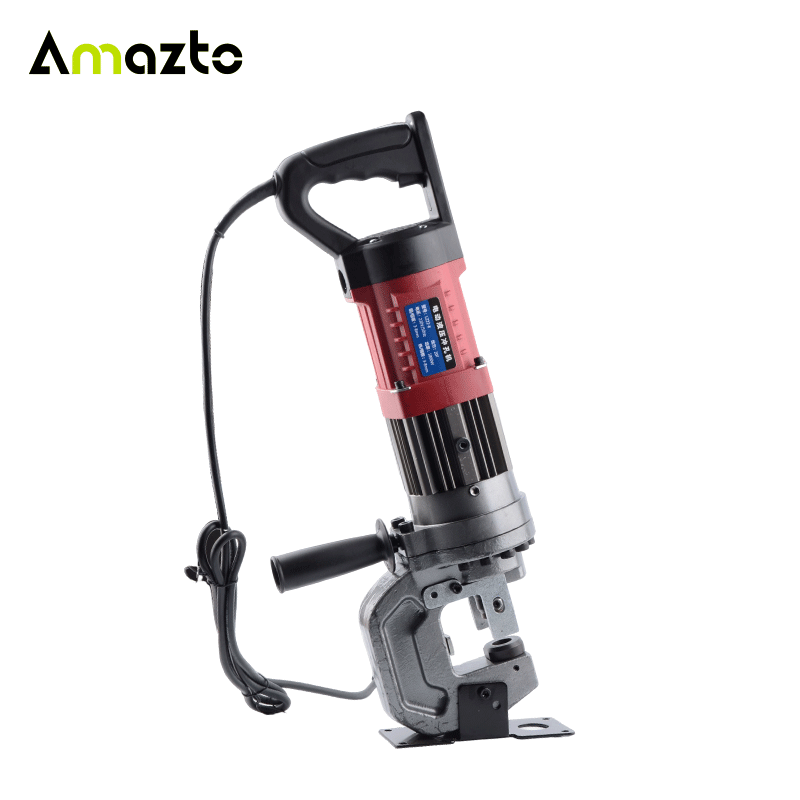
Throat depth is easy to overlook because buyers often focus on punching force or motor power. In profile work, however, the throat determines whether the punch can reach the intended location.
On the LZ22-8, the 40 mm throat depth provides a defined working space for positioning material. A Channel Steel Electric Punching Machine with a suitable throat dimension can reduce the need to move the workpiece simply because the punch cannot reach the required point.
This makes throat depth an important specification when comparing equipment for channel steel fabrication.
Punching Force Must Match the Material
The LZ22-8 is rated at 20T output and 1800W power. The manufacturer lists 3–8 mm thickness for copper or aluminum row, iron or steel plate, and angle iron.
A Channel Steel Electric Punching Machine should be evaluated according to the actual steel section and thickness used in a project. Punching force, die size, material thickness, and profile geometry all affect the working range.
The same principle applies to related profiles. A machine with greater nominal force is not automatically more suitable if its working depth or tooling does not match the material.
Die Selection Connects the Machine With the Hole
The punch and die determine the resulting hole size. The LZ22-8 uses standard molds of Φ6.5, Φ9, Φ13, Φ17, and Φ20.5 mm, with customized molds also available.
For profile work, buyers may need several diameters for different connection points. Interchangeable molds can support these requirements without changing the basic machine.
Die condition also matters during production. Worn tooling can affect hole quality, so inspection and replacement become part of routine maintenance.
Positioning Is a Separate Production Step
Punching accuracy depends on more than rated force. The channel section has to be marked, aligned, and supported correctly before the punch is engaged.
The LZ22-8 includes an adjustable throat structure intended to help position the material. This gives operators more control when working with different hole locations.
For a Channel Steel Electric Punching Machine, consistent marking and positioning can be as important as the capacity printed on the specification sheet.
Electric Drive Fits Fixed Work Areas
Unlike battery-operated punching tools, the LZ22-8 is specified for 220V/50Hz operation and uses an 1800W motor. Its listed weight is 11 kg or 15 kg depending on configuration.
This makes it suited to workshops, fabrication stations, and installation environments where electrical power is available.
A Channel Steel Electric Punching Machine can serve as a dedicated station for recurring profile work, while cordless equipment makes more sense when fabrication needs to move between locations.
Hydraulic Structure Supports Repeated Punching
The motor supplies power to the hydraulic system, which delivers force through the punching head. Linzhi describes the LZ22-8 with a pure copper motor, sealed head, and hydraulic punching structure.
For metal fabrication, this structure provides a compact way to generate punching force while keeping the equipment suitable for workshop and field-related tasks within its specified range.
B2B buyers should also consider maintenance access, hydraulic condition, sealing, and die wear when planning long-term equipment use.
Profile-Specific Equipment Requires Specific Evaluation
The development of the Channel Steel Electric Punching Machine shows why profile geometry deserves as much attention as punching force. This Channel Steel Electric Punching Machine is shaped around that profile-specific requirement. Throat depth, die size, material thickness, positioning, motor power, and hydraulic output all influence how the machine fits a fabrication process.
For B2B buyers, evaluation should begin with the actual profile and hole requirements. A Channel Steel Electric Punching Machine can then be matched to the material range, working depth, electrical supply, and expected production setup.
As channel steel fabrication becomes more varied, profile-specific punching equipment can create a more direct connection between the shape of the material and the capabilities of the machine.