 English
 中文简体
中文简体 русский
 GET A QUOTE
Industry News
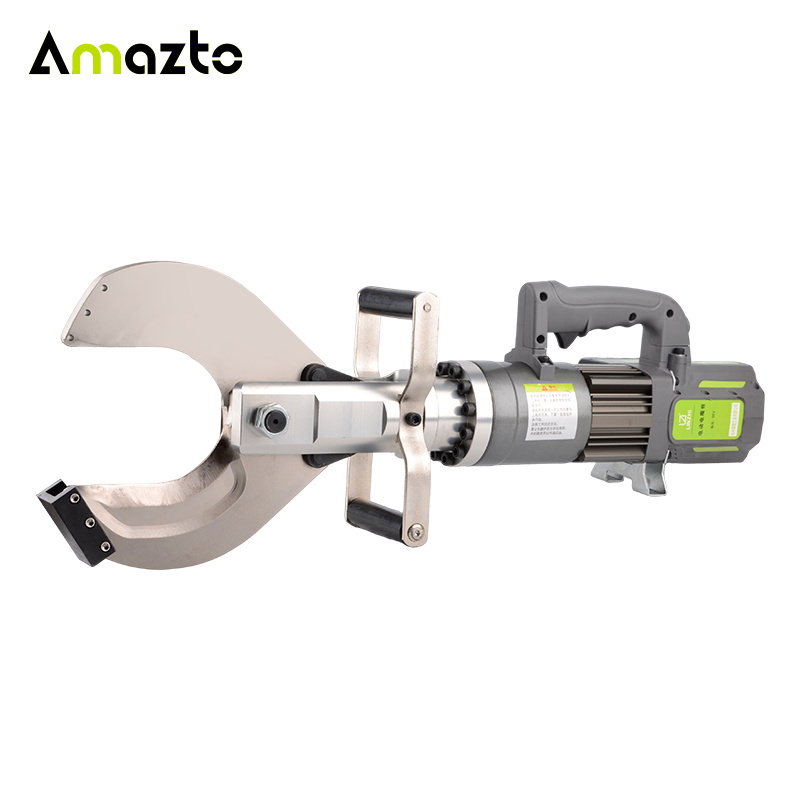
Cable cutting requirements vary sharply between utility maintenance, telecom installation, construction, and industrial service work. A tool intended for repeated field use needs to balance cutting capacity, portability, operator control, and mechanical durability. The Battery Cable Cutter developed by Taizhou Linzhi Tool Co., Ltd. addresses these requirements through a rechargeable hydraulic structure rather than a manually driven cutting mechanism.
For B2B buyers, the important issue is not simply whether a cutter can sever a cable. Product configuration needs to match cable diameter, conductor construction, working frequency, and the conditions in which technicians will operate. These factors also influence which model should be included in a distributor's product range.
Hydraulic Power Changes the Cutting Structure
A rechargeable hydraulic system combines a lithium battery, electric motor, hydraulic pump, cylinder, and cutting head in one portable tool. When the operator activates the tool, electrical energy drives the hydraulic mechanism, which converts motor output into controlled cutting force.
The Battery Cable Cutter uses this integrated structure to reduce dependence on external hydraulic equipment. A compact body supports mobile work, while the housing, hydraulic components, blade assembly, and connection points still need to withstand repeated load.
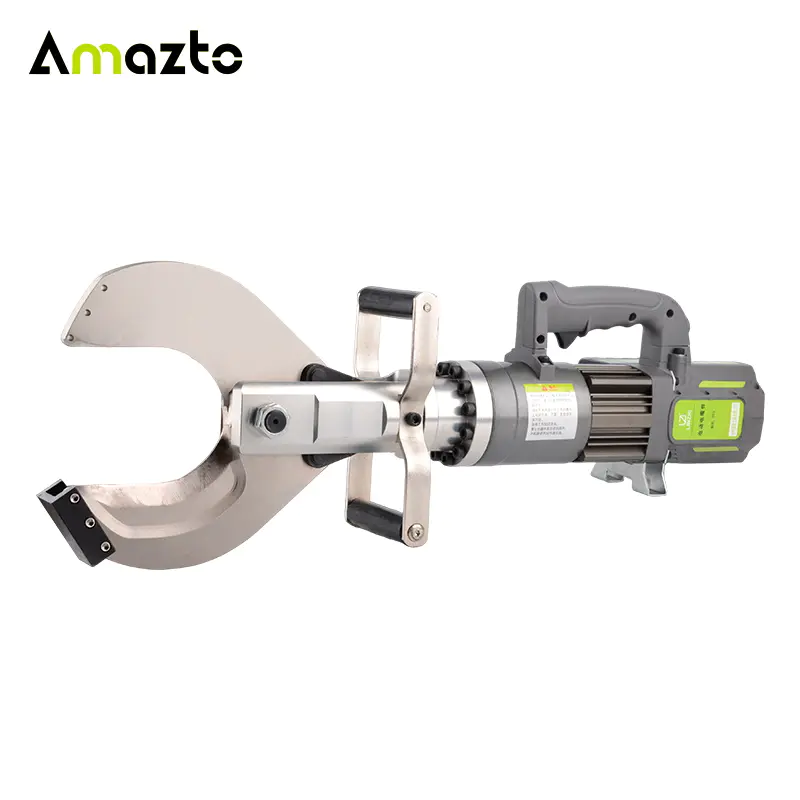
Linzhi's product range includes LZB-150C, LZB-135C, and LZB-120C models. Different models give distributors options when serving customers with different cable-processing requirements. A waterproof configuration is also available in the LZB-135C model, which can be relevant when buyers are building a range for demanding field environments.
Cutting Head Configuration Should Match Cable Work
Cable diameter is one of the practical specifications buyers should review before placing a bulk order. A cutting head designed for a particular working range cannot simply be treated as interchangeable with every cable application. Cable construction also matters because single-core, double-core, and multi-core cables can create different cutting resistance.
The Battery Cable Cutter incorporates an adjustable cutting head to accommodate different cable diameters. This helps procurement teams match tool models with specific customer applications.
|
Procurement Factor |
What to Review |
Why It Matters for Buyers |
|
Cable diameter |
Applicable cutting range |
Helps match each model with the cable sizes handled by target users |
|
Cable construction |
Single-core, double-core, or multi-core |
Cutting resistance can vary with conductor arrangement |
|
Power system |
Rechargeable lithium battery |
Determines whether the tool fits mobile field work |
|
Cutting head |
Adjustment and positioning |
Affects compatibility across different cable specifications |
|
Operating environment |
Standard or water-resistant configuration |
Helps distributors separate general-use and demanding field models |
This specification-based approach is useful for wholesalers and electrical-tool distributors because product selection can be linked directly to application requirements.
Material and Assembly Control Support Repeated Use
A professional Battery Cable Cutter contains several load-bearing components that require consistent manufacturing control. Linzhi uses high-strength metal materials in the tool structure, while the hydraulic system and cutting assembly require accurate positioning during assembly.
The cutting head is especially important because blade alignment affects how force reaches the cable. If mechanical components do not maintain their intended position, cutting performance can become inconsistent. Assembly inspection therefore needs to cover component fit, moving-part operation, hydraulic behavior, and overall tool condition.
The product also uses a non-slip handle to support controlled operation and positioning in restricted work areas.
Linzhi's manufacturing range covers hydraulic tools and electric processing equipment, so the Battery Cable Cutter sits within a broader product system rather than as an isolated item. This can be useful for distributors that source several related tool categories from one manufacturing partner.
Battery and Hydraulic Systems Need Joint Inspection
Battery-powered hydraulic equipment requires coordination between electrical and mechanical systems. The battery supplies energy to the motor, while the hydraulic section converts that energy into cutting force. A problem in either section can affect the operating cycle.
For this reason, production inspection should not stop at checking whether the motor starts. Manufacturers need to verify switching response, hydraulic movement, cutting-head operation, structural assembly, and return movement. Repeated operation testing can also help identify assembly issues before shipment.
For B2B orders, buyers can discuss battery configuration, model selection, cutting range, packaging, and inspection requirements before production.
Model Selection Can Follow the Cable Application
The Battery Cable Cutter category can serve several professional markets, including electric power, telecommunications, construction, transportation, petrochemical, mining, and related maintenance work. The purchasing logic differs from consumer tool selection because distributors need to consider the downstream users they serve.
A buyer supplying utility contractors may prioritize cutting capacity and durable construction. A telecom-tool distributor may need compact equipment for mobile installation teams. A general industrial supplier may prefer several models covering different cable sizes.
The Battery Cable Cutter therefore works as a product category that can be organized around cable specifications rather than a single universal configuration. Linzhi's range of lithium battery hydraulic cable cutters gives overseas buyers a basis for building such a product mix, while model-specific technical discussions can support OEM and bulk-order planning.
 Previous